
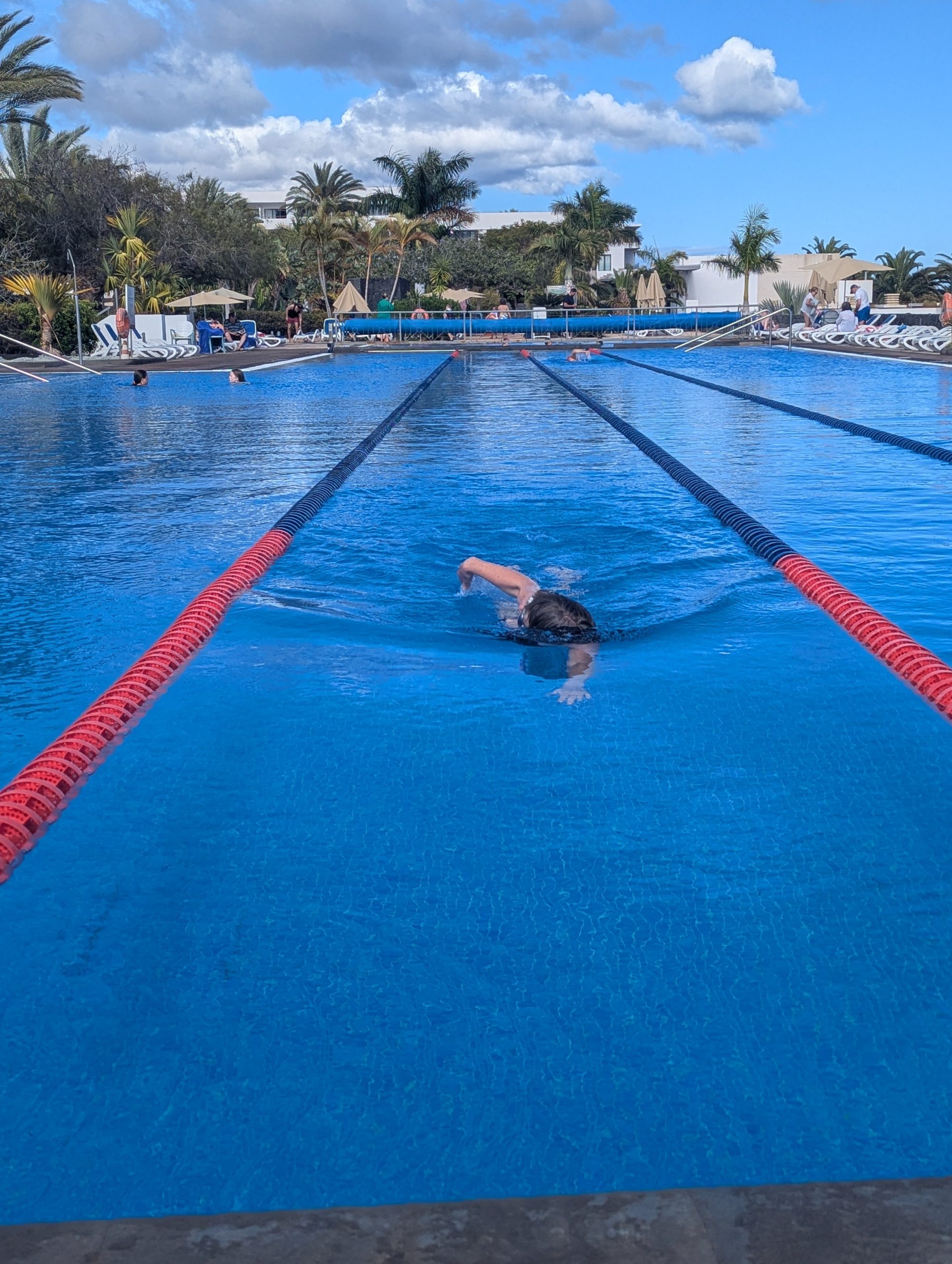
The calm, contained water of the swimming pool is like a blank canvas; we have to decide what kind of impression we’re going to leave.
A pool session, depending on what we do, can leave us either discombobulated and exhausted, or calm, organized, and energized. If a quest for speed, distance, or stroke perfection isn’t helping you feel better, try changing your approach.
Fight or Flight or Floating Light?
The goal is to move out of “fight or flight” sympathetic nervous system behaviour and towards “rest and digest” parasympathetic.
The kind of swim that depletes our energy from overdoing it is counterproductive if we’re hoping to manage excess weight or anxiety because it is likely to make us feel exhausted, miserable and hungry.
Practise Doing Less
If you’re a competent swimmer who suffers in any way from swimming laps, try a routine built entirely on ease. Here are my favourite ways of covering a few 25-metre lengths:
Underwater Breaststroke:
Relax your neck, look at the floor, and come up for air only once or twice a length, breathing in quietly through your nose. If you focus on relaxing, enjoying the support of the water and not forcing the air out, it’s surprising how long you can stay underwater. Being underwater for longer seems to be the main difference between a swim that excites and one that relaxes.
Submerged Front Crawl:
After a few deep, calm breaths, try a length of crawl without turning to breathe. If you can’t make it, turn on to your back for a nice breather before going back under.
Back Crawl Kicking:
‘Nose and Toes‘
Spend a few lengths on the back, watching the legs work, keeping as much of yourself as possible submerged, including your mouth, using your nose for breathing and letting only the toes break the surface as you kick. It’s important to let your back rest underwater and avoid sticking your chest out.
Let each leg sink before sending the toes back to the surface.
Old English Backstroke:
Rest your back as deep as it wants to go so that the limbs can drift away from the center, letting it happen instead of doing it, then “swish” the hands and feet together in a single, synchronized motion.
Finish with some Floating:
A couple of minutes enjoying a mushroom float, a jelly fish float and a bit of vertical floating is a lovely way to finish a session. If you’ve been doing too much, this is where you realise it.
There is always the possibility that swimming will over excite and cause strain. But if we can manage to prevent that, the opposite can happen and the water becomes a source of energy rather than a drain.